“Voting” – Written for Imprint Magazine, November 2018 .

I woke up early like it mattered. Every Tuesday, I wait until noon to complete two hours of online quizzes that are due at two o’clock. I always have all week to do this, but I always wait. I still don’t know why. November sixth was the only time I broke this habit by submitting everything the night before, since Monday is usually when I go to school, come back, and sleep all day. It seemed like nothing, but it felt very symbolic coming from a sedentary person like me. I thought that I had a good reason to care and prepare for Tuesday, that all of us did, everyone my age. For the first time, we didn’t just decide to vote in the 2018 midterm elections. For the first time in a long time, we all felt like we had to vote.

I began to dress, and carefully. Partisan stereotypes aside, I have never had a normal conversation with anyone about politics in my few years as a journalism student. Leftists seem loud and proud, Centrists try to simplify everything and don’t talk much, and Republicans are shy, often defensive. It’s a shame. Those of the Right in particular never seem like they want to talk to reporters, but I had to know what they thought, I was determined. I’d be carrying a microphone and a headset, so I tried to look as non-threatening as possible – I decided to put on lots of bright red, like a costume.

—–

My polling place is very close to me. On the drive there, I began to remember why I was voting. Our country is home to hundreds of millions of people, the weight of this society puts lots of pressure on us and clusters different communities into big and little veins of resources that would be mined that day. Why are these people sought after and harvested like gold, or overvalued and harvested anyway, like fool’s gold? At the end of things, the purpose of collecting these precious metals is so that they can be processed, sold back to the public to wear, and I didn’t want to wear fool’s gold for another four years.

But I had better reasons for voting than wanting to win. So many will vote just for the smug satisfaction of winning, so many treat all levels of politics like the same little games because they don’t risk losing anything. An older man likely wouldn’t find abortion rights more appealing, for example, than voting for the same party that his daddy voted for, and his daddy’s daddy before him. Not only wouldn’t it be directly beneficial to him, it would also break tradition, two things that so many are obsessed about when it comes to almost any choice, politically especially.

When the average person votes for terrible politicians who do terrible things, it’s often an exercise of proxies. The famed Milgram Experiments that began in 1961 showed Americans that 63% of subjects, average people, were willing to deliver a fatal electric shock to someone who they didn’t know because they felt it was required of them to do so, since the folks conducting these experiments promised the subjects that they would not be held responsible for any damages. effect was faked of course, there was no harm done by either kind of subject tested, those being people in the autonomous or agentic state as Yale psychologist Stanley Milgram called them. The latter, those who were considered “agentic,” were those who acted against their morality because they believed that they could pass off the responsibility for the consequences of their actions onto their authority figures who commanded them. But, what if the shocks were real?

A political opinion piece written by a fellow student at the University of Central Florida, a conservative student who seemed to me to be full of this agentic behavior. He defended his identity profusely, returning after every other sentence to his main point. He was a proud conservative, but not personally racist, sexist, or homophobic. My thought process while reading his work felt similar to what the autonomous test subjects may have been thinking before refusing to deliver any more shocks. In my case, I wanted to ask the student if he claimed to not be racist, or sexist, or homophobic, but still willingly chose to elect politicians who are well known for intrinsically racist, sexist, and homophobic policies, what’s the difference? To me there is none, and just as I desired to vote for the party I registered for, so too did I want to do the right thing, even for people who aren’t me.

—–

As I parked, I noticed that one of the lawn signs outside my polling place stood out. The sign was white and green, vastly different colors than the reds and blues everywhere else. It displayed a picture of a racing dog. “Love greyhounds?” it said, “V NO on 13.” Proposition 13 was of course the motion to ban greyhound racing, and voting no would really be a vote in favor of the controversial sport; looking closer at the ad, complete with a heart in place of the letter o in “love,” revealed that it was paid for by the Committee to Support Greyhounds in a last ditch effort to trick people into voting against their best wishes, trying to mine that vein of gold.

Finding it despicable, I took a picture of the sign so that I could accurately report on it. I noticed on my walk to the American Legion’s doors that an elderly poll worker, leaning against his truck, had been keeping a close eye on me. As he pushed himself off and started walking in my direction, I ducked into the building to get my voting out of the way and avoid worrying anyone else by acting too curious.

The process was straightforward as ever, identical to how it’s been every time I’ve voted. The iPads that were used to check me in were slow and the poll workers were already exhausted with something like ten hours left on their shifts, trying to do all of their work while sitting in chairs. I was at ease, I was finally here to make a difference. Going through my ballot, I was relieved to see that the wording of Proposition 13 was direct enough to dispel the big lie suggested by the Committee to Support Greyhounds. Still, my cynicism reminded me that somewhere, someone surely fell for it. Somebody was tricked into buying a fool’s gold necklace with the real thing. The proposition passed in the end, meaning that they luckily got a gold necklace instead, but the principle of the whole thing kept me angry, looking for more things to write about.

—–

I looked around for someone my age to interview, but the only person outside was the elderly poll worker from earlier. I approached him this time. I asked for his name, but he refused to tell me.

“You know how reporters are,” he said, “they say it’s off the record until you see it in the paper.”

I backed off on the formalities and settled for his permission to publish what he said as long as he felt comfortable saying it. After we sat down on a bench together, on a red bench in my red shirt and red shoes, he shared with me his life.

The poll worker, 74, has been living in Orlando for 50 years, but growing up in Rhode Island surrounded by Italians had given him a raspy accent similar to Don Corleone that was unique for this part of the country. From 1962 to 1968, he served in the U.S. Army Reserve at Fort Benning before going to work full time as a cook and Supply Sargent in the National Guard Bureau during the Cuban Missile Crisis. Luckily, after being notified that he’d be going to Vietnam mere months into his incomplete basic training at the age of 18 and a half, he was spared from seeing any theater of war due in part to President Kennedy’s well-timed de-escalation efforts. Part of the reason too that he never fought was because of his older brother; he was already fighting, and their mother simply wouldn’t allow both of her sons to be in harm’s way at the same time. His brother served for twenty-one years in the U.S. Air Force, passing away in 2014 from Lou disease brought about by exposure to Agent Orange. The poll worker remembered his brother and spoke about his days in the military quite fondly, without grief, pausing every now and then to look at the sky behind us.

“I would go again today, if they called me. Now, what could I do? Maybe sweep,” he remarked.

“I’d go again in a heartbeat, in a heartbeat.”

His service in the military made him feel a connection to the American Legion. The help that organizations like these provide to veterans like himself, his late brother, and his friends, were a reflection of what he lived to do: to serve for others.

“I just thought it would be, not a duty, but it would be an honor to do this, give people the right to vote.”

Another poll worker exited the building and walked over to us.

“Are you a reporter for someone?” She asked.

The man sitting beside me interjected before I could say anything back. “No, he’s writing my biography.”

I was glad that he did. Tension that remains unbroken can carry harsh punishments for something so simple as an innocent misunderstanding. With it gone, she nervously laughed and commented on the heat, which we all agreed that we enjoyed.

“I just wanted to check, we’re not allowed to have any reporters around here.”

I asked them both why. Both of them hesitated to say what seemed like what was on the tip of their tongue, but we were eventually given a more formal answer by our guest.

“Be… cause they sometimes cause problems.”

The tension had come back. The words weren’t heavy, but we all stayed silent for a moment like we were watching them fall out of the air and waiting to hear them hit the ground.

Once again, Mr. Corleone kicked the TV.

“I just seen two guys from my church here, they voting?”

After some more small talk, the woman walked away to ask someone else about the weather and got even less out of them. It was nothing, but it still felt like an escape.

“I figured she’d be out here sooner or later to check on ya.”

He continued with one last story about how the military once saved him from being a citizen, one vastly perpendicular to his first tale of a dangerously close brush with the war that would eventually take his brother’s health, and life. It was a simple story from a short time that he spent at home from the Reserve. Looking for work, he was advised to talk to a friend of his mother’s, and was soon tasked to take a sealed envelope to the Capitol Building in Rhode Island. It was easy enough to follow the man’s instructions, which verbatim were “don’t open the fucking envelope,” and he eventually was assigned a profitable vending machine route for whom he found out three weeks later was the New England boss. This worried . Since his mother’s friend had done him a favor by giving him a job, he said, they were going to want a favor in return. He decided to open a business with the help of a friend, a print shop, so that he wouldn’t have to ask for any more jobs of the local mafia, but it wasn’t long before they found him again. The same man that gave him his first job entered his shop and told him to counterfeit football pool tickets. It was good money, and he was a good friend of the family, but the more he did this, he said, the more he would owe him. He was becoming paranoid, worried that he would never find a way out, but it was at this time that the military called him back to Fort Bennet. He had escaped, and was such a pleasant surprise that it still made him smile, as if he just found out.

“I was so glad. I was so glad. I didn’t take any more stupid jobs after that anymore.”

He had been a poll worker for eight or nine years, and he said that this year was his last.

“I was watching you close over there. I didn’t know what you was doing and said to myself well, I gotta check, make sure my gun was lowered.”

—–

As I left, the man waved at me and walked back to his truck, its back window half-covered in Trump stickers. I felt a feeling of great change from the experience, similar to what one would feel if they could sense the the earth moving beneath their feet. Another generation of Americans, still in their old ways, were finally beginning to make peace with the slow cycles of this great magnet. They’ve lived their lives, satisfied enough that they feel less and less obligated to demand much more of this world for themselves, only to make it a better place for others.

I always forget that old men like him were once young men like me, and that not every clash between our generations must always be political. I voted the way I did, he his own, and though I may see him objectively as part of that agentic 63%, it was the first time that I didn’t care very much.


For his daughter, whom he wanted to read this.

Why my business cards (used to) look like that.

REVISION- Since this post was published years ago, I’ve gone back in to clarify that (or imply?) I no longer use self-made business cards with these pictures on them. Yet, the stories still mean something, so they’re still here.

ORIGINAL- These cards are the first batch I’ve ever intended for use in serious networking. You may be wondering why don’t they look as formal as the word “serious” implies.

I wanted to design something that would capture, in the simplest way, the concept of storytelling as I understand it.

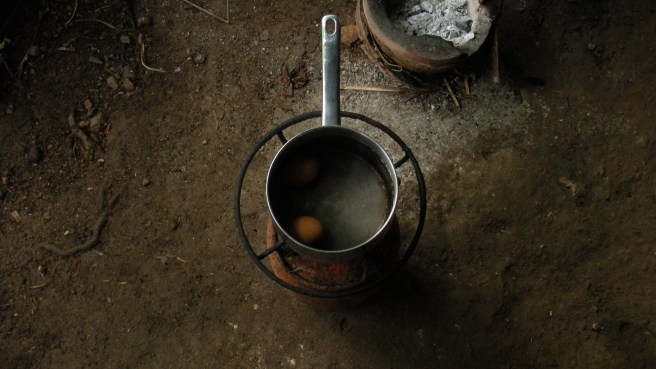
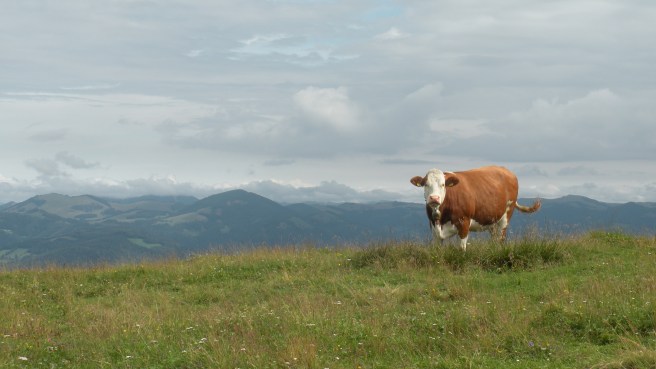
A picture is worth a thousand words, of course, but only if the first words are a question. Why is there a cow on the back of this card? Why did you choose to show working professionals, people who you should respect, a picture you took of a boiled egg?

I did that because I wanted to make you curious.

I have a passion for creating and satiating curiosity. I have a passion for storytelling.

I could pull up any one of the thousands of pictures from my travels across the world and explain without hesitation why I took it. When I designed my cards, I picked seven pictures to create a small variety of stories for you to explore. In this article, I’ll be going through the whole set.

Scroll down to find the story that I wrote just for you.

: :

DSCN5899Pai, Thailand

Tuesday, 13 October 2015

A propane tank tapped to cook food was the most useful tool in Tila’s outdoor kitchen; his pet chickens would occasionally peck at it as they roamed freely throughout his home in the jungle, overlooking a small town from a decent height. Pai was less than a mile away, but it’s surrounded by hilly mountains and a thick fog would cover every building in the valley on all but the sunniest of days. Looking West out of Tila’s compound makes the nearest civilization feel not a mile away horizontally, but vertically. Visibility was an issue, but we would fly at top speed from mountain to mountain through the fog on rented 49CC mopeds like bats catching flies. On this particular day, I stayed home.

Wherever I go, no matter where or for how long, there’s always a moment of silence toward the end of the trip that makes me do life math and rethink things. When I was in Europe, one year prior to being in Thailand, I had such a moment when I jumped into a cold swimming pool in Santorini. In Thailand, it was here. When I looked at the stars for the first time, I was not reminded, but shown just how far away I was from home. The lasting effects of that moment continued into the next day; I awoke to the sound of chirping birds, quietly set up the propane tank and drank instant coffee while the water boiled and cooled. I sat in silence, waiting for the caffeine to start.

Tila was an old man, easily in his 70s, so it surprised me that he wasn’t there having breakfast with me. To my left above Tila’s electric kettle were several tropical birds, each sitting still in a cage. I scanned them with a glance to see which bird was singing so loudly that it woke me up. After a few puzzled seconds searching for movement and finding none, I remembered that he liked to play on-repeat classical melodies disguised as bird songs to teach his pets Debussy and Mozart. Tila had made the impression of a quirky guy before this happened, but I was now interested in this carefree life. He never had to sweep because his floors were made of dirt. He never had to use gas to get into town because it was downhill. He cooked for us several times, being courteous as to wait until we were finished to tell us that we had just eaten liver and pig foot soup, for example. He effortlessly helped me feel more comfortable in a place where I felt incredibly alone and vulnerable. When I finally found him that day, I thanked him for it.

Hard-boiled eggs are still one of my favorite backpacking foods.

: :

DSCN5420Bangkok, Thailand

Wednesday, 7 October 2015 (journal entry)

From the 32nd floor of the tallest apartment building on our side of the street, opportunity has landed. Welcome to Bangkok.

Being on the opposite side of the world means that everything is switched — taxis are worth the money, tap water dehydrates you, the language looks upside down and sounds backwards to a “farangi” like me, a foreigner.  Also, I’m not drinking something as I write this; the beer in Thailand is dry and makes me tired, unlike the European stuff that seemed to love me as much as I it – thinking now, my relationships with items of recreation have been more numerous, fruitful and trustworthy than the comparatively narrow range of human friendships I’ve been having, at least while I travel.

It’s the seventh of October now, a Wednesday, just in case I fall asleep before I’m done thinking. I hate nothing more than forgetting, I’ll not let myself be tricked into believing that only what I’ve photographed is all that I’ve experienced here. Everything else is just as blurry as the few scribbles that capture who I became after entering a land 12 hours away from my home — lazy, content with eating and sleeping like a dog who knows how to speak, but will never learn how to talk, who will never be equal to his masters, always a plaything.

I spent days in Bangkok before thinking, before taking any pictures or remembering anything; this city is less compatible with that sort of vacation than most places are, every day it cries the same gray rain, it’s difficult to get very good pictures from the top of a skyscraper, anyway. I’m not sick, I’m just tired. Being a world away from my old life has me feeling lifeless — I speak in a new tone of voice here, the clothes I wear feel damp and hang off of my body like my shoulders were the gallows. I feel new.

: :

DSCN0394Near Reykjavik, Iceland

Friday, 30 May 2014 (journal entry)

It was the kind of day journey that anyone willing to travel this far north deserves. The landscape was waking up, it just needed a bit of time to compose itself. It began as far away hills; the hills came closer and allowed us to explore their curves before giving way to large black rocks and steaming rivers. Then came the plant life, and with it sheep. The hills and stones came together to grow mountains that shot white clouds into the sky. As we climbed a mountain’s inviting southern face, it continued to change. Streams began pouring out of cracks in the ground, along them appeared flowers and flocks of small birds. We watched as the valleys dropped and filled with boulders and boiling water, transforming the riverbank into a dangerous cliff. We took turns standing on the cliffs to look down at Earth’s creation. Climbing into another valley, halfway up the side of another mountain, and halfway down, we eventually found our hot springs.

We picked a spot and dropped everything from packs to trousers, bare down to board shorts. Stepping into the water felt like getting into a hot bath; the playful sting of ten million bubbles rippled across every submerged part of my skin, and turned it red. If any of us said anything, it was about how good we felt. Finally I understand why some people are willing to dirty 50 gallons of hot water for a single bath, as opposed to taking a shower. Want to know why? It’s to feel almost as good as this.

There were several other groups nearby soaking. One of our new friends wondered if the river stretched behind the foot of the nearest hill to a place where we could sit and drink privately. Rather than just one of us go, all five of us decided to feel the unique shock of leaping from the hot bath into lady Iceland’s cold arms, hoping to find her warm heart on the other side of this particular mountain. It went quite well, all things considered; we moved quickly and nobody took our things, however the mountain didn’t have another side, and the river didn’t follow it. It seemed to stretch backward like a shadow, leading us only to a dirt path that was being crossed by a troupe of pony-riding tourists. They gawked at us five, shivering now as our skin turned from red to stark white, limping as our feet began to freeze. Collectively, we decided in an instant to run back. Thiemo and I made it first, several years of rowing had exposed us to enough frozen grass and metal docks to make our escape tolerable.

Before hopping back in our pool, as David, Mike and Shawn caught up with us, I captured the moment.

: :

DSCN2987Pompeii, Italy

Saturday, 7 June 2014 (journal entry)

Leaving Italy soon with a twitch. Our most expensive country so far. Thiemo only has 1,400 left, David has 1,000. Thiemo’s getting worried, but he’s lucky. Two giant men almost lifted his wallet on the train back to Napoli. I saw as they loomed over and under him, staring out at the street while one reached down into my friend’s pockets. Thiemo felt it and reacted; nothing about how he patted his side would have logically made the pickpockets back off, but they chickened and ran, got off at the next stop. And so did come and go our fifth interaction with thieves. Four-to-one odds now, losing only once when Thiemo donated 20 euro to the famous and fictional “Blind Deaf Orphan Fund,” tugging on sleeves under the Eiffel tower for their “funding.” Maybe this factors into why Thiemo and David don’t have enough money left between them to afford a month’s rent in Thornton Park, much less two months abroad. That’s how long we’ve got left, anyway.

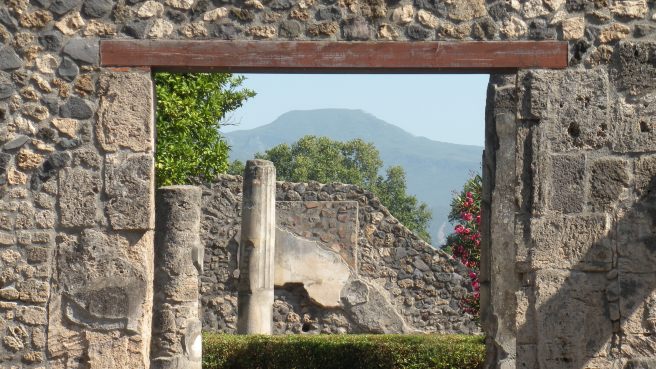
We’re riding a train to Bari to ride a boat to Greece and then a bus to Athens. After a day or two of that, we’ll be free to glide across the Aegean sea on hydrofoils and mopeds. In just a month, we’ve been everywhere from frozen tundra to lush mountain forests, cities to towns, alleys and warm houses, but the beach will be new. An ocean that’s more blue than the sky, they say.  I decided to look forward to it. I could benefit by looking forward to something else, similarly to how I looked forward to visiting Pompeii, as that experience was already over. The last of my ilk to see Pompeii was my Great Grandfather, stationed here during the second world war, so visiting was a treat.

It took an entire day to explore the ruins. We reached them at the end of an hour-long metro loop outside Napoli; around the station, for every five people, there was one stray dog and half a souvenir stand. But the same crowd wouldn’t fit through the turnstiles as we did, us and a few of the dogs.

It felt like we were the only ones in town. Pompeii may be 2,000 years old, but it only looks and feels like it’s 200. Most walls are standing, ceilings too. Pumps and pipes were repaired and fountains for public drinking are being used again. There’s enough graffiti, enough of a human element still in Pompeii, to make everything appear like it was destroyed yesterday. This is why it felt so empty to us. This was a ruin, but it felt like just another city, one of many that we would explore on the trip. We subconsciously expected to find people living, eating, drinking at a bar around the next corner, expected to see a car rolling down one of the streets, to find a place to stay.

I tripped on a curb just like I do all the time at home and it made me think of what my town might look like in 2,000 years. I shuddered to imagine a world that I wouldn’t see, but it’s good to be reminded of that. Memento Mori, so and so.

: :

DSCN3438Macedonia

Monday, 21 July 2014

Our doubts were made clear this night. We should have taken the ferries back to Europe.

Wishing to never again attempt sleeping on the deck of a rocking boat, we left Thessaloníki by train. It was wonderful at first, I must have read half a book between each nap that followed some new discovery that put train travel above the sea. Noticing the warmth for example, stretching your legs out and feeling a soft cushion beneath your ass. That was nice.

I remembered getting a plastic lawn chair to use on our first ferry, from Athens to Aegina. They were spread about the deck like people would have been if the weather was nice, and any chair without an occupant was sliding from rail to rail, some even paced up and down the side of the deck like leopards. David stood up.

“Five hours left and I’ve only got a quarter of beer.”

I almost felt sorry for him. I felt worse for myself after being reminded of the time.

“I’m getting spins. Here.”

He handed me something under his elbow that he didn’t want me to look at — searching fingers confirmed that it was a large pocket knife.

“I’m not saying that you’ll need this tonight, but here.”

It was like him to try and protect himself like that. I understood. If you’re too old or drunk to fight, you hire a mercenary. But how necessary is fighting, really? Would you still be getting in fights if you weren’t so old and drunk sometimes? And even if it wasn’t your fault, where do you draw the line between comfort and danger?

You could start in Macedonia.

We were only there for about two hours, but we would have been out sooner if Thiemo didn’t choose to take a shit right then and there. I will explain. You see, Macedonia is one of a few countries that separate two or more parts of the EU, yet connect said parts with a railroad. Boarding a train that passes through these regions with nothing but a EURail pass is like briefly being a pirate, smuggling yourself through.  I learned this when the train stopped, and tall folks dressed in brown and gray jumpsuits began to check every ticket and passport.

I fumbled, yet managed to find enough physical cash to pay them off. David followed suit, closing a lighter wallet and heavier passport. After some time, Thiemo startled us both by rejoining us. He never realized that everyone got checked, and before we had time to explain, there were guards on him barking questions about his situation in a foreign language. They took him high by his arm and pulled him off of the train.

What was about to happen? Would the train leave? Should we get off? We didn’t have phones with us and even if we did, neither of us had the guts to call Thiemo’s family to tell them that he had been killed in Eastern Europe. We felt helpless, realizing the obsolescence of things like pocket knives when things go truly very wrong.

Thiemo returned to us after about ten minutes of pure liquid anxiety, laughing.

A best case scenario, like we flipped a coin and picked the right side. But I hate that idea. The cab was still warmer than the sea, but I shivered for miles, all the way until we reached Venice.

: :

DSCN4169Graz, Austria

Early August, 2014 (journal entry)

My watch is gone, I have no concept of time thanks to that and this mountain fog. We are slowly crossing the finish line — with a second visit to Amsterdam long gone, pipe dream that it was, all that’s left to do is wait here in Austria. The safe house, the safe country, the way home. I don’t know what day it is, but we’ve all been sleeping on the floor of Thiemo’s apartment in Graz for about four of them now; sitting, reading books, taking showers, cooking with our roommate’s pots and pans. All out of boredom. That’s what having best friends is all about, finding people who you’re content to just sit and do nothing with. It reminds me of home. I am comfortable.

Graz is a small city, it serves as good cover for a traveler wanting to disappear for a few days. I speak from experience. On foggy days like this, the shadows will keep you hidden all the way into town and back, you’ll not see a single person witness you as you buy tickets to a punk show and get kebabs after. It’s a fine place to live if living is your only priority, however I’m afraid that too much silence will have the same effect on me here that it does in Orlando. A sudden motivation to get out, because you don’t think while you’re in Graz; you live and you work, and you sleep, but you don’t introspect. It’s great if you’ve got a cloudy mind and need to relax, but if I still haven’t come up with any new ideas by tomorrow, it might be time for another trip to the bar so that I can at least fall asleep faster. This thing moves one day at a time.

The train rides have taken days to complete for that matter, but I’ll remember them as brief intermediate stages of my own bardo, maturing me bit by bit until I am a wholly new person. There really isn’t anything quite like traveling.

: :

IMG_20160601_141540Appalachian trail, North Carolina / Tennessee

Monday, 30 May 2016 (journal entry)

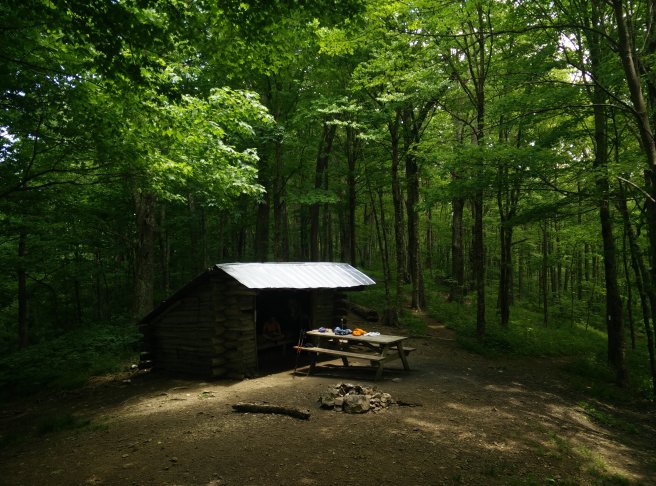
First day — Pack was all shoulders for the first five miles. It’d be easier to enjoy this if I wasn’t looking at the ground all day. But you voice every thought you have and it keeps you busy doing exactly that. Getting them out of you feels good, I’m beginning to think that it’s a part of the fabled “detox” some people look for out here, but I’m willing to bet that anyone who decides to walk ten miles a day, eat only two meals and drink nothing but purified mountain water is going to feel better than they would in the rat race.

The snacks were delicious, but the dinner was shit; some people claim that finding pieces of broken shells in your clam chowder is a credit to its authenticity, but I disagree. I gave all of mine to Rainman, the trail name of an elderly guy wearing a bright yellow rain suit who we passed on the trail, but later passed us at the shelter as we ate supper, not stopping to even rest. It was thrilling to see him again, but that thing seems to happen a lot out here, forward and back are the only ways to go. Not back of course; or, so it would seem. I’ve been ruminating over how my companions’ personalities have begun to change, ever after a single day. I’ll keep an eye on it, only so much unhappiness can be tolerated during an entire week in the forest. I might as well talk about it.

Abe’s shoulder suddenly began to hurt when we arrived at the shelter, for example. He didn’t help cook the food, gather and purify any water, hang the food or even search his bag before falling asleep, leaving us to find an opened pack of gum the next morning. This is when Trace began to get annoyed; the bag, hanging in front of us as we slept, could have been easily found and investigated by a hungry bear. Anything that can fit in the jaws of such a creature will go down its throat if let, and we wanted to finish our 50-mile hike on both feet, so Abe got chastised a bit after waking up. Were it not for the fact that Abe also didn’t eat the night before, I would have been harder on him, but I can’t help but think that he might just be going through a weak spell. Happens to all of us. He mentioned feeling better later on after managing to find three different kinds of prescription medications from our neighbors that we shared the roof with. Speaking of this, it is cramped. I don’t feel like I’m decompressing, laying here shoulder to shoulder with people who smell worse than myself. Their hygiene can’t be helped, but their etiquette is impressive; there are more rules in the forest than there are in society, they must all be followed.

Going to sleep in my clothes, like the bears. Huh, I just noticed that I’m wearing wool, it’s more like I’m a sheep instead. Taking orders, too. I’m being herded, fed when it’s time to be fed. I’d resist out of pride, but being stubborn is only going to result in hunger and pain, I’ve got to listen.

Before I went to bed, as I finished my paragraph, a mouse jumped on my journal and looked at me before diving back into the shadow cast behind it by my headlamp. Nothing else happened that night.